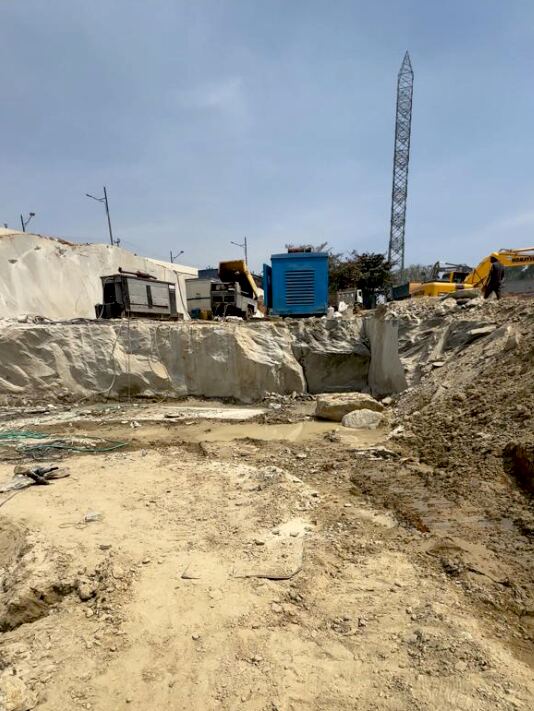
Basement excavation looks straightforward on a drawing — dig to the required depth, form the walls, pour the slab. On site, especially in Bengaluru, it's usually the stage where schedules slip and budgets get revisited. Two things drive most of the complexity: the depth relative to neighbouring structures, and how much water you have to manage along the way.
Why Basement Excavation Is a Different Category of Work
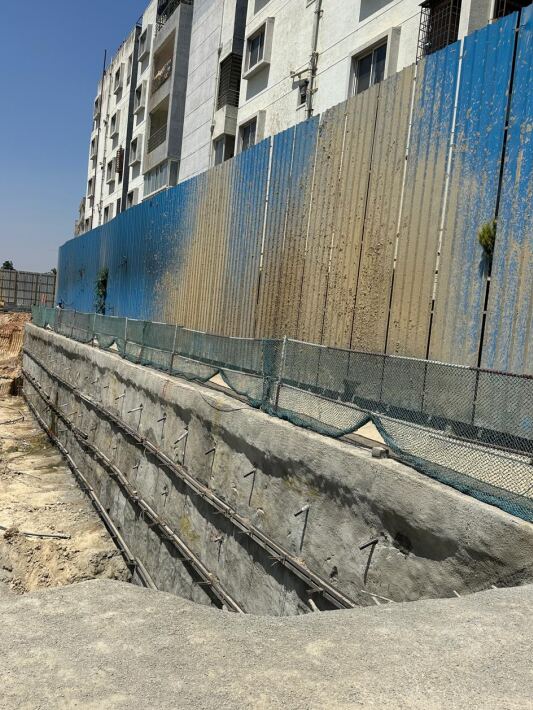
Unlike open-site mass excavation, basement excavation almost always happens next to something — a boundary wall, a neighbouring foundation, a road, or utilities. That proximity means the excavation face usually needs to be supported (through shoring, sheet piling or a soil-nailed face) rather than left as a simple sloped cut, and the sequencing has to account for what's directly next door.
Reading the Water Table Before You Start
Groundwater level is one of the first things a soil investigation report should establish clearly, because it determines almost everything downstream — the excavation method, the type of shoring, and whether dewatering runs for weeks or months. In parts of Bengaluru, seasonal variation in the water table is significant enough that a site that looks dry in summer can behave very differently after sustained monsoon recharge.
Shoring and Retention: Picking the Right System
- Soldier pile and lagging — a common, relatively economical system for moderate depths in soils that can stand briefly unsupported between piles.
- Sheet piling — effective where groundwater control at the excavation face itself matters, since sheet piles also act as a partial water cutoff.
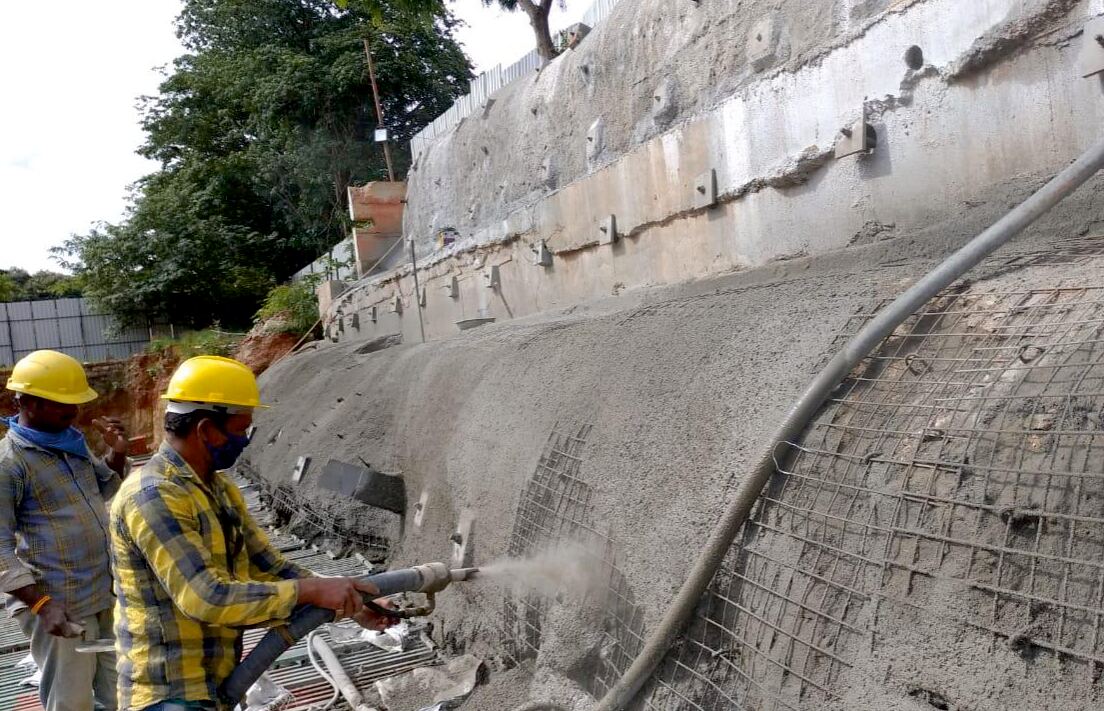
- Soil nailing with shotcrete — suited to basements where a permanent, finished excavation face is acceptable and ground conditions allow it.
- Secant or diaphragm walls — used for deeper basements or where very tight groundwater and deflection control is required, typically on larger commercial developments.
Dewatering: Matching Method to Volume
Dewatering isn't a single technique — it's chosen based on soil permeability and the volume of water expected:
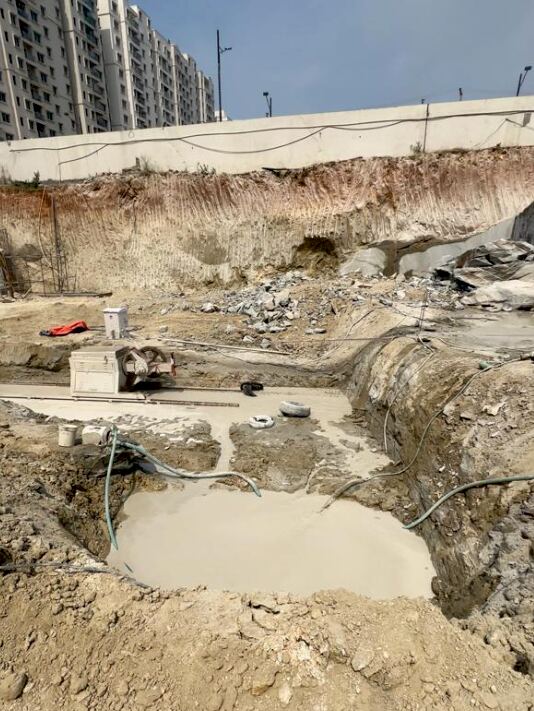
- Sump pumping — the simplest approach, suitable for lower water inflow and less permeable soils.
- Well-point systems — a series of shallow wells with a common header pipe, used for moderate inflow across a wider excavation footprint.
- Deep bore dewatering — used where a genuinely high water table or permeable strata (such as weathered rock with fissures) demands sustained, higher-capacity pumping.
Underestimating dewatering capacity is one of the most common causes of delay on basement projects — it's worth over-specifying slightly rather than discovering mid-excavation that pumping can't keep pace.
Sequencing and Safety
Excavation, shoring installation and dewatering need to be sequenced together, not treated as separate work streams. Excavating faster than the shoring can be installed — or than dewatering can control the water table — is a common shortcut that creates real safety risk. A disciplined contractor will stage the work, monitor the excavation face, and adjust the pace based on what the ground is actually doing, not just the schedule on paper.
What This Means for Planning and Budget
Because water table conditions and soil variability drive so much of the cost and timeline, it's worth commissioning a proper soil investigation before finalising a basement budget — not after. A contractor who has actually run basement excavation and dewatering on comparable Bengaluru sites will usually flag these risks upfront, rather than let them surface as change orders once work has started.